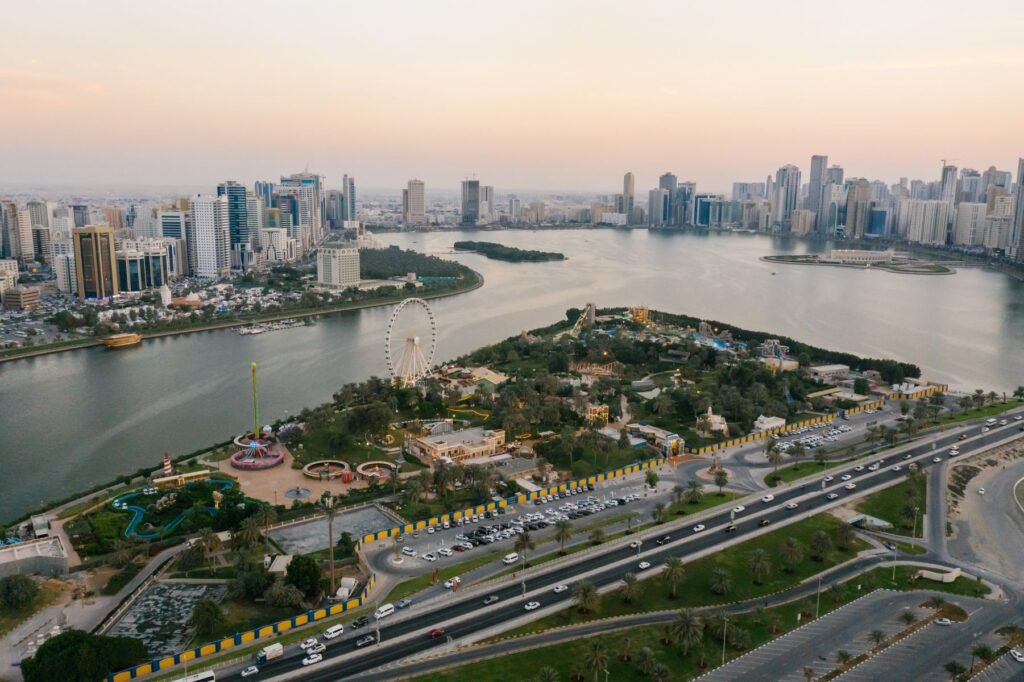
Dubai gets most of the attention in UAE property conversations, but a growing number of expat buyers are looking north — to Sharjah’s walkable new communities, Ajman’s beachfront developments, and Ras Al Khaimah’s island resorts. The financing side of that decision is where most buyers get stuck: not every project in these emirates is mortgageable, not every bank lends in every zone, and the rules are easy to get wrong if you assume “it works like Dubai.”
Published: 28 August 2026
This guide maps out exactly where expats can buy with a mortgage in the Northern Emirates, which banks are actually active in each zone, and how the same CBUAE lending rules that apply in Dubai carry over here — with a few practical differences worth knowing before you make an offer.
Can expats get a mortgage in the Northern Emirates?
Yes — but only in designated freehold or investment zones, and only where a bank has confirmed it will lend on that specific project. The Central Bank of the UAE (CBUAE) regulates mortgage lending the same way across all seven emirates, so the loan-to-value (LTV) and debt-burden-ratio (DBR) rules you’d meet in Dubai apply identically in Sharjah, Ajman, and RAK. What differs is the property law in each emirate — whether foreigners get true freehold title, a long-term usufruct right, or something else — and, in practice, which banks have chosen to build lending panels for that emirate’s projects at all. Our Non-Resident Mortgages in the UAE guide covers financing from outside the UAE; this post is about zone-by-zone access once you’re comparing Sharjah, Ajman, and RAK against each other.
Sharjah: usufruct rights in named zones, national banks lending at Dubai rates
Sharjah does not use Dubai-style freehold. Under Executive Council Resolution No. 26 of 2014, foreign, non-GCC buyers in Sharjah’s designated zones hold a usufruct right of up to 100 years rather than outright title — although Sharjah Law No. 2 of 2022 opened the door for absolute freehold ownership in specific approved projects, subject to the Ruler’s approval. In practice, this means the exact registrable right can differ from project to project, even within the same community, so confirming whether you’re buying usufruct or true freehold on your specific unit — not just what the sales brochure says — is a first step before a bank will even consider the file.
Zones where expats can buy (and where mortgages are active): Aljada, Al Mamsha, Tilal City, Maryam Island, Al Zahia, and Masaar are the names that come up most often as approved, foreign-buyer zones with active bank lending. Aljada — Sharjah’s flagship master development by Arada — has the deepest bank coverage, with ADCB and Dubai Islamic Bank both active on completed and select off-plan phases. Al Mamsha, Aljada’s car-free residential district, has attracted HSBC and Emirates NBD financing on completed units. Maryam Island’s waterfront apartments have seen First Abu Dhabi Bank activity.
Rates: Because the same national banks lending in Dubai also lend in these Sharjah zones, pricing is broadly comparable rather than a “Northern Emirates premium.” As of August 2026, Sharjah Islamic Bank advertises the lowest headline rate in the wider UAE market at around 3.75%–3.78% (reducing), a genuinely Sharjah-based lender worth comparing directly since its published rates move more than the larger Dubai banks and aren’t always kept current online. Standard Chartered and Dubai Islamic Bank have also shown competitive Sharjah-specific pricing, with conventional offers from roughly 3.78% and Islamic (Sharia-compliant) offers from around 3.90% in recent market checks.
Ajman: true freehold, a smaller but active lending panel
Ajman’s ownership structure is more straightforward than Sharjah’s on paper. Since Amiri Decrees No. 7 and 8 of 2008, non-GCC foreigners can hold full, permanent freehold title — land and building — in designated zones, with no local partner required. That’s a genuine advantage over Sharjah’s usufruct model if outright ownership matters to you.
Zones where expats can buy: Al Zorah (Ajman’s beachfront master community, developed with Al Zorah Development Company), Ajman Downtown, Ajman Corniche, Emirates City, Al Yasmeen, Al Mowaihat, and Al Nuaimiya are the most commonly cited freehold areas.
Banks: Ajman Bank — the emirate’s own fully Sharia-compliant bank — is the most consistently active local lender across these zones, with home finance from around 3.99% in current market comparisons. Beyond Ajman Bank, buyers should expect a shorter list of willing lenders than Dubai or even Sharjah; several of the larger national banks apply project-specific approval lists in Ajman rather than blanket-approving every development, so it’s worth confirming a bank’s live lending panel for your specific building before signing a reservation form, not after.
Ras Al Khaimah: the clearest freehold framework of the three
RAK offers the most Dubai-like ownership structure of the Northern Emirates: clean freehold title for foreign nationals in designated investment zones, administered through the RAK Real Estate Regulatory Authority (RAK RERA).
Zones where expats can buy: Al Marjan Island (RAK’s flagship man-made archipelago, now home to the under-construction Wynn Al Marjan Island resort and casino — a major driver of recent lending interest), Al Hamra Village and its sub-communities, Mina Al Arab, and Dafan Al Nakheel are the established freehold investment areas.
Banks: RAKBANK, headquartered in the emirate, is the deepest and most flexible lender here, with home loan pricing from roughly 3.89% up to around 4.99% (5-year fixed, reducing) depending on the product — its standard Home Loan, the offset-style “Home in One” account (where funds sitting in a linked current account reduce the interest charged on your outstanding balance), and a Green Home Loan available only in RAK for BARJEEL green-building-certified properties. Salary-transfer customers typically receive a 0.10%–0.25% discount over non-salary-transfer pricing. Other national banks including Emirates NBD, ADCB, and Mashreq have increased their RAK lending activity alongside the Al Marjan Island development pipeline, though RAKBANK’s local presence still gives it the widest project coverage.
LTV and DBR rules: identical to Dubai, wherever you buy
This is the part that surprises some buyers: the CBUAE’s Regulations Regarding Mortgage Loans (Circular No. 31/2013, as amended) set nationwide limits — they don’t vary by emirate. A bank lending in Aljada applies the same ratios as it would in Downtown Dubai.
| Buyer category | Property value | Maximum LTV (expats) |
|---|---|---|
| First property, owner-occupied | AED 5 million or less | 80% |
| First property, owner-occupied | Above AED 5 million | 70% |
| Second/investment property | Any value | 60% |
| Off-plan property | Any value, any buyer category | 50% |
On top of the LTV cap, every lender applies the CBUAE’s 50% debt burden ratio (DBR) — your total monthly debt obligations, including the new mortgage payment, cannot exceed half your gross monthly income. For an investment property, banks must also discount at least two months of expected rental income from that calculation to account for vacancy periods. Whichever of these two limits — LTV or DBR — produces the smaller loan amount is the one that actually applies, so a high property value doesn’t automatically mean the maximum LTV percentage is available to you. See our UAE Mortgage Eligibility guide for a full walkthrough of how lenders calculate your borrowing limit.
Off-plan buyers looking at Northern Emirates launches should also read our Off-Plan Mortgage Financing guide — the 50% off-plan cap and staged-drawdown mechanics work the same way outside Dubai as they do inside it.
Zone-by-zone snapshot
| Emirate | Key mortgageable zones | Ownership type | Most active lender(s) |
|---|---|---|---|
| Sharjah | Aljada, Al Mamsha, Tilal City, Maryam Island, Al Zahia, Masaar | Usufruct (up to 100 years); freehold in select approved projects since 2022 | ADCB, Dubai Islamic Bank, Sharjah Islamic Bank, HSBC, Emirates NBD |
| Ajman | Al Zorah, Ajman Downtown, Ajman Corniche, Emirates City, Al Yasmeen | Full freehold since 2008 | Ajman Bank, plus a shorter list of national banks on approved projects |
| Ras Al Khaimah | Al Marjan Island, Al Hamra Village, Mina Al Arab, Dafan Al Nakheel | Full freehold in RAK RERA-designated zones | RAKBANK, with growing activity from Emirates NBD, ADCB and Mashreq |
A few practical differences follow from this table that don’t show up in most generic “can foreigners buy property” articles. Because Ajman and RAK grant true freehold while Sharjah’s default is usufruct, some banks apply marginally more conservative terms — or extra legal due diligence — to a Sharjah usufruct unit than to an equivalent freehold unit in Ajman or RAK, even at the same purchase price. It’s also worth noting that a usufruct right in Sharjah is still inheritable and mortgageable for its remaining term, so it isn’t a barrier to financing on its own — it simply changes what your bank’s legal team checks before approval, and how many years remain on the right matters if you’re buying a resale unit partway through its term rather than a new one with the full 100 years ahead of it.
Documents and process: what’s different from a Dubai purchase
The mortgage application itself follows the same core process as a Dubai purchase — see our Documents Required for a UAE Mortgage checklist for the standard list (passport, visa, salary certificate, bank statements, Emirates ID). Two things tend to catch Northern Emirates buyers out that Dubai buyers rarely encounter:
- Valuation timelines can run longer. Bank-appointed valuers cover Sharjah, Ajman, and RAK less frequently than Dubai, so scheduling a property valuation — a mandatory step before final mortgage offer — can add several extra days to your timeline. Build this into any purchase agreement deadline.
- Registration authority differs by emirate. A Dubai purchase registers with the Dubai Land Department; a Sharjah purchase registers with the Sharjah Real Estate Registration Department (SRERD); Ajman purchases go through the Ajman Real Estate Regulatory Authority; and RAK purchases register with RAK RERA. Each authority has its own fee schedule and processing time, so your Al Ghaf consultant or broker should confirm the specific registration cost and timeline for the emirate you’re buying in before you finalize a budget.
Why not every Northern Emirates project is mortgageable
Even inside an approved freehold zone, an individual building or master plan needs its own bank approval before a mortgage is possible on it — banks maintain internal “approved project” lists, and a development can sit in a fully legitimate freehold zone while still being unmortgageable if no lender has completed due diligence on the developer, the escrow arrangement, or the specific building. This is the single most common reason a Northern Emirates purchase falls through after a buyer has already paid a reservation deposit. Before committing funds on any Sharjah, Ajman, or RAK project, ask the seller or agent directly which banks currently have that project on their approved lending list, and get it confirmed by the bank itself, not just repeated by the sales team.
Northern Emirates vs. Dubai and Abu Dhabi: the bigger picture
If you’re still deciding which emirate to buy in rather than which zone within Sharjah, Ajman, or RAK, our Dubai vs. Abu Dhabi vs. Sharjah guide compares ownership structures and fees at the emirate level. This guide goes one level deeper — it’s the zone-by-zone, bank-by-bank map for buyers who’ve already decided to look north and want to know exactly where financing is actually available.
Frequently Asked Questions
Can a foreigner get a mortgage in Sharjah without a UAE resident visa?
It’s harder than as a resident, but possible with some lenders on a non-resident basis, typically at a lower LTV (often 50%–60%) and with a larger cash down payment. See our Non-Resident Mortgages guide for the general non-resident framework, which applies the same way in Sharjah as in Dubai.
Is Sharjah property freehold or leasehold for expats?
Neither exactly — most designated Sharjah zones grant non-GCC foreigners a usufruct right for up to 100 years under a 2014 resolution, though Sharjah’s 2022 law allows true freehold in specific approved projects subject to Ruler approval. Always confirm the exact registrable right for your specific unit, not just the zone name.
Does Ajman offer true freehold ownership to foreigners?
Yes. Since 2008, non-GCC foreigners can hold full, permanent freehold title — land and building — in Ajman’s designated zones such as Al Zorah, Ajman Downtown, and Emirates City, with no local partner required.
Which bank has the lowest mortgage rate for Sharjah property?
Sharjah Islamic Bank has advertised the lowest headline rate in the broader UAE market recently, around 3.75%–3.78% reducing, though published rates for smaller Northern Emirates-based lenders move more frequently than the larger national banks — always confirm the current rate directly before relying on it.
Can I use RAKBANK’s Green Home Loan outside Ras Al Khaimah?
No — it’s specific to RAK and applies only to BARJEEL green-building-certified properties within the emirate.
Are the CBUAE loan-to-value limits different in Sharjah, Ajman, or RAK compared to Dubai?
No. The CBUAE’s LTV and debt-burden-ratio rules are set nationally and apply identically across all seven emirates — up to 80% for an expat’s first owner-occupied property under AED 5 million, stepping down for higher-value, second, or off-plan properties.
Is every project in a Sharjah, Ajman, or RAK freehold zone automatically mortgageable?
No. Being inside a legally designated freehold or investment zone is necessary but not sufficient — a specific building or master plan still needs to be on an individual bank’s approved lending list before that bank will issue a mortgage on it.
Do off-plan purchases in the Northern Emirates follow the same 50% LTV cap as Dubai off-plan?
Yes. The CBUAE’s 50% maximum LTV on off-plan property applies regardless of emirate, buyer category, or property value.
Which Northern Emirates zone has the most bank lending options?
Aljada in Sharjah currently has the broadest bank coverage among Northern Emirates freehold zones, followed by Al Marjan Island in RAK, largely driven by major development activity including the Wynn Al Marjan Island project.
Should I use a mortgage broker for a Northern Emirates purchase instead of going straight to a bank?
It’s worth it specifically because approved-project lists and pricing for these smaller markets change more often and are less consistently published online than for Dubai — a broker working across multiple banks can confirm live approval status for your exact building before you commit a deposit. See our Broker vs. Bank guide for the full comparison.
Get zone-specific financing advice
Buying outside Dubai doesn’t mean navigating the financing alone. Al Ghaf Mortgage Consultant Co LLC provides Mortgage Consulting and Banking Consultation for buyers across the UAE, including Sharjah, Ajman, and Ras Al Khaimah — we can confirm which banks are actually lending on your specific project before you commit a deposit, and structure your application to the right lender the first time. Contact us to get started.